segunda-feira, 3 de dezembro de 2012

relating to the negative


''For the last several years, there has been a lot of focus on the power of positive thinking. Many people have come to misinterpret this wisdom to mean that it is not okay to have a bad mood or a negative thought or feeling.

This can lend a kind of superficiality to their relationship with life and relationships with other people.

It can also lead them to feel that if a negative thought or feeling comes up, in themselves or someone else, they must immediately block it out.

When they do this, they are engaging in the act of repressing a part of themselves that needs to seen, heard, and processed. When we repress parts of ourselves, they don’t go away so much as they get buried deep within us, and they often come out when we least expect it.

On the other hand, if we allow ourselves to be fully human, honoring all the thoughts, feelings, and moods that pass through us on a given day, we create a more conscious relationship with ourselves.

Instead of blocking out thoughts and feelings that we label as negative, we can simply observe them and then let them go.

They only get stuck when we react to them negatively, pushing them down and out of sight where they get lodged in our unconscious minds.

(...)

Rather than setting our minds up in such a way that we become fearful of the contents of our own consciousness, blocking out anything that is less than 100 percent positive, we might resolve to develop a friendlier attitude toward ourselves, trusting in our inherent goodness.


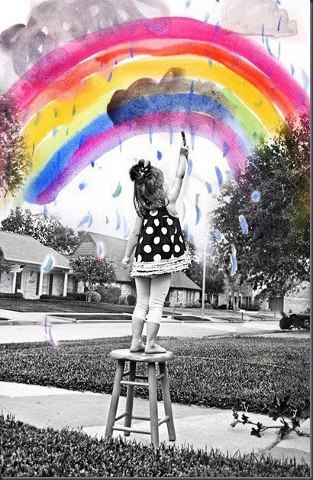
When we recognize our true inner worth, a few dark clouds passing through our minds will not intimidate us.

We will see them for what they are—small, dark figures passing through an expansive sky of well-being and truth.''

by Madisyn Taylor

Dhafer Youssef


sexta-feira, 30 de novembro de 2012

gladdening nourishmen​t


''Children appreciate all that is silly as a matter of course.

Their grasp of humor is instinctual, and even the smallest absurdities provoke joyous gales of earnest laughter.

As we age, this innate ability to see the value of silliness can diminish.
Work takes precedence over play, and we have less incentive to exercise our imaginative minds by focusing on what is humorous. When we remember childhood, we may recall the pleasures of donning funny costumes, reciting nonsense poems, making up strange games, or playing pretend.
This unabashed silliness nourished our vitality and creativity. 
We can take in this nourishment once again by giving ourselves permission to lighten up and be silly.Too often we reject the wonderful silliness that is an inherent, inborn aspect of the self because we believe that it serves no purpose or is at odds with the grown-up culture of maturity.

We play yet we do not lose ourselves in play, and our imaginations are never truly given free reign because we regard the products of irrational creativity as being valueless.
Yet silliness itself does indeed constitute a vital part of human existence on a myriad of levels.

Our first taste of ethereal bliss is often a consequence of our willingness to dabble in what we deem outrageous, nonsensical, or absurd. We delight in ridiculousness not only because laughter is intrinsically pleasurable, but also because it serves as a reminder that existence itself is fun.

Skipping, doodling, and singing funny songs are no less entertaining than they were when we were children.
We need not lose all interest in these cheerful and amusing activities, but to make them a part of our lives we must be ready to sacrifice a little dignity and a lot of fear.

It is precisely because so much of life is inescapably serious that silliness should be regarded as a priority.


Through the magic of imagination, you can be or become anything—a photographer, a professional athlete, a dancer, a pilot.

Whether you take hundreds of silly pictures, revel in the adulation of your fans as you make the winning catch, boogie down rock-star style in front of your bedroom mirror, or turn your desk into a cockpit, the ensuing hilarity will help you see that lighthearted fun and adulthood are not at all incompatible. ''

by Madisyn Taylor


quinta-feira, 29 de novembro de 2012

burdensome feelings


''As we begin to truly understand that the world outside of us is a reflection of the world inside of us, we may feel confused about who is to blame for the problems in our lives.

If we had a difficult childhood, we may wonder how we can take responsibility for that, and in our current relationships, the same question arises.

We all know that blaming others is the opposite of taking responsibility, but we may not understand how to take responsibility for things that we don’t truly feel responsible for.

We may blame our parents for our low self-esteem, and we may blame our current partner for exacerbating it with their unconscious behavior. Objectively, this seems to make sense. After all, it is not our fault if our parents were irresponsible or unkind, and we are not to blame for our partner’s bad behavior.

Perhaps the problem lies with the activity of blaming.

Whether we blame others or blame ourselves, there is something aggressive and unkind about it.

It sets up a situation in which it becomes difficult to move forward under the burdensome feelings of shame and guilt that arise.

It also puts the resolution of our pain in the hands of someone other than us.

Ultimately, we cannot insist that someone else take responsibility for their actions; only they can make that choice when they are ready.


In the meantime, if we want to move forward with our lives instead of waiting around for something that may or may not happen, we begin to see the wisdom of taking the situation into our own hands.
We do this by forgiving our parents, even if they have not asked for our forgiveness, so that we can be free.


We end the abusive relationship with our partner, who may never admit to any wrongdoing, because we are willing to take responsibility for how we are treated.

In short, we love ourselves as we want to be loved and create the life we know we deserve.

We leave the resolution of the wrongs committed against us in the hands of the universe, releasing ourselves to live a life free of blame. ''

by Madysin Taylor

terça-feira, 27 de novembro de 2012

one of a kind


''Many of us have had an experience in which we felt like the lone black sheep in a vast sea of white sheep.

For some of us, however, this sense of not belonging runs more deeply and spans a period of many years. It is possible to feel like the black sheep in families and peer groups that are supportive, as well as in those that are not. Even if we receive no overt criticism regarding our values, there will likely be times when it seems that relatives and friends are humoring us or waiting for us to grow out of a phase. Sometimes we may even think we have been adopted because we are so different from our family members.

These feelings are not a sign that we have failed in some way to connect with others. Rather, they should be perceived as the natural result of our willingness to articulate our individuality.
Many black sheep respond to the separateness they feel by pulling back from the very people to whom they might otherwise feel closest and embracing a different group with whom they enjoy a greater degree of commonality.


But if you feel that your very nature has set you apart from your peers and relatives, consider that you chose long ago to be raised by a specific family and to come together with specific people so that you could have certain experiences that would contribute to your ongoing evolution.

You may be much more sensitive than the people around you or more artistic, aware, spiritual, or imaginative.

The disparate temperament of your values and those of your family or peers need not be a catalyst for interpersonal conflict. If you can move beyond comparisons and accept these differences, you will come to appreciate the significant role your upbringing and socialization have played in your life's unique journey.

In time, most black sheep learn to embrace their differences and be thankful for those aspects of their individuality that set them apart from others.


We cannot expect that our peers and relatives will suddenly choose to embrace our values and offer us the precise form of support we need.

But we can acknowledge the importance of these individuals by devoting a portion of our energy to keeping these relationships healthy while continuing to define our own identities apart from them. ''

(Madisyn Taylor, DailyOm)


domingo, 25 de novembro de 2012

Insight, o que é ?


''De vez em quando alguém me pergunta o que seria exatamente um "insight", já que esta é uma palavra bem utilizada por muitos quando estão falando sobre autoconhecimento. Por isso vou explicar em detalhes.

Ter um insight significa descobrir ou perceber algo que antes você não percebia, sobre si mesmo, ou sobre o funcionamento da vida, do mundo, do universo...
 
Por exemplo: Em determinado momento você percebe que está se deixando manipular por alguém, e descobre que está permitindo que isso aconteça porque se sente culpado por algo que fez; sendo assim, está tentando compensar algo que antes nem se dava conta. Quando você percebe a situação, é como um despertar interior. Antes havia uma cegueira, e agora as coisas ficaram claras.

Posso dar vários outros exemplos: quando você percebe que um determinada coisa que irrita no seu marido/esposa é porque isso lembra algo que seu pai/mãe fazia; quando você percebe que um determinado ciclo se encerrou (um trabalho, um negócio, um relacionamento) e você precisar mudar para algo novo e sente isso com clareza no seu interior; de repente, você se dá conta que está sabotando seu progresso profissional (arranjando desculpas que o fazem perder oportunidades ou adiar ações, por exemplo) e sentiu que por trás disso há um sentimento de não merecimento, enquanto que antes, você pensava que a falta de progresso era devido ao azar, ao acaso; quando você percebe que não adianta ficar lutando e se esforçando pra que uma determinada coisa aconteça ou que alguém mude, e aí você entra em um estado de paz e aceitação e resolve abrir mão do falso controle que antes pensava ter; quando você percebe que está agindo igualzinho a um padrão emocional da sua mãe, repetindo a mesma história de sofrimento; quando surge uma decisão sobre o que fazer a respeito de algum assunto que antes o fazia se sentir perdido; quando você percebe que está com raiva de alguém porque, na verdade, tem medo de ser abandonado por essa pessoa etc..

Enfim, são muitas as formas que os insights podem aperecer
, nas mais diversas áreas da nossa vida.
 
O que existe em comum em todos os insights, é que surge uma clareza maior do que antes. Às vezes ficamos até surpresos por não termos percebido algo tão óbvio.
Insights podem vir à tona a qualquer momento: durante ou após um momento de sofrimento intenso; numa caminhada; quando resolvemos relaxar; em uma conversa com alguém; num momento de reflexão; durante a leitura de um livro ou texto; num estado de quietude e silêncio...

(...)

As emoções negativas que guardamos, sejam elas conscientes ou inconscientes, provocam uma distorção na forma como vemos as coisas e interpretamos o mundo.
 
É fácil constatar isso quando alguém, ao sentir uma raiva intensa, fala coisas que depois se arrepende de ter falado. É possível que, depois de mais calma, a pessoa perceba o quanto foi exagerada e injusta. Uma decepção ou sentimento de tristeza pode também trazer vários pensamentos negativos sobre a vida, que depois desaparecem quando a emoção é curada.
 
Mas não são apenas as emoções intensas que provocam distorção na nossa percepção.
 
Qualquer emoção negativa, mesmo as mais sutis, influenciam a nossa forma de interpretar o mundo. Funcionam como se fossem um filtro.
 
(...)

É comum também surgirem lembranças de fatos do passado que estavam aparentemente esquecidos, ou que a pessoa pensava já não ter mais qualquer sentimento guardado.
 
De repente, percebemos que aquelas lembranças ainda trazem emoções que estão nos atrapalhando em determinada situação atual.
Tudo isso faz parte do processo de ter insights.

(...)


O insight também pode se confundir com a intuição.
Nos processos intuitivos, surge um saber interior sobre o que devemos fazer, mas não sabemos explicar exatamente o porquê.
 
Fica difícil colocar em palavras e explicar racionalmente. Mas aquilo faz sentido pra nós. Existe uma lógica e uma explicação mais profunda, porém, às vezes não conseguimos deixar que venha à tona plenamente.
Apenas sabemos que devemos fazer algo de determinada forma. ''
(...)

André Lima


sexta-feira, 23 de novembro de 2012

He


''He who knows others is wise.
He who knows himself is illuminated.
He who defeats others is strong.
He who defeats himself is powerful.
He who knows happiness is rich.
He who keeps his path is wilful.
 
Be humble and you will become whole.
Bend and you will become straight.
Empty yourself and you will become full.
Wear yourself out and you will become new.
 
The wise man does not show off, and so he shines.
He does not make himself known, and so he is noticed.
He does not praise himself, and so he has merit.
And because he does not compete,
none in the world can compete with him.''
 
Lao Tsu


quinta-feira, 22 de novembro de 2012

Fully committed to now

''Sometimes, we may find ourselves wishing we knew what our lives are going to look like or what gifts and challenges are going to be presented to us in the coming months or years.

We may want to know if the relationship we’re in now will go the distance or if our goals will be realized. Perhaps we feel like we need help making a decision and we want to know which choice will work out best. We may consult psychics, tarot cards, our dreams, and many other sources in the hopes of finding out what the future holds.

Usually, at most, we may catch glimpses. And even though we think we would like to know the whole story in all its details, the truth is that we would probably be overwhelmed and exhausted if we knew everything that is going to happen to us.

Just think of your life as you’ve lived it up to this point.


 If you are like most of us, you have probably done more and faced more than you could have ever imagined.

If someone had told you as a child of all the jobs and relationships you would experience, along with each one’s inherent ups and downs, you would have become overwhelmed.

With your head full of information about the future, you would have had a very hard time experiencing your life in the present moment, which is where everything actually happens.
In many ways, not knowing what the future has in store brings out in us the qualities we need to grow.


For example, it would have been difficult to commit yourself to certain people or projects if you knew they wouldn’t ultimately work out.
Yet, it was through your commitment to see them through that you experienced the lessons you needed to grow.

Looking back on your life, you would likely be hard pressed to say that anything in your past should not have happened. In fact, your most challenging experiences with their inevitable lessons may have ultimately brought you the greatest rewards.

Not knowing the future keeps us just where we need to be—fully committed and in the present moment.''

(Madysin Taylor, DailyOm)


How the city was pacified

''An old legend tells of how a certain city in the Pyrenees mountains used to be a stronghold for drug-traffickers, smugglers and exiles. The worst of them all, an Arab called Ahab, was converted by a local monk, Savin, and decided that things could not continue like that.
As he was feared by all, but did not want to use his fame as a thug to make his point, at no moment did he try to convince anyone. Knowing the nature of men as well as he did, they would only take honesty for weakness and soon his power would be put in doubt.
So what he did was call some carpenters from a neighboring town, hand them a drawing and tell them to build something on the spot where now stands the cross that dominates the town. Day and night for ten days, the inhabitants of the town heard the noise of hammers and watched men sawing bits of wood, making joints and hammering in nails.
At the end of ten days the gigantic puzzle was erected in the middle of the square, covered with a cloth. Ahab called all the inhabitants together to attend the inauguration of the monument.
Solemnly, and without making any speech, he removed the cloth.
It was a gallows. With a rope, trapdoor and all the rest. Brand-new, covered with bee’s wax to endure all sorts of weather for a long time.
Taking advantage of the multitude joined together in the square, Ahab read a series of laws to protect the farmers, stimulate cattle-raising and awarding whoever brought new business into the region, and added that from that day on they would have to find themselves an honest job or else move to another town. He never once mentioned the “monument” that he had just inaugurated; Ahab was a man who did not believe in threats.
At the end of the meeting, several groups formed, and most of them felt that Ahab had been deceived by the saint, since he lacked the courage he used to have. So he would have to be killed. For the next few days many plans were made to this end. But they were all forced to contemplate the gallows in the middle of the square, and wondered: What is that thing doing there? Was it built to kill those who did not accept the new laws? Who is on Ahab’s side, and who isn’t? Are there spies among us?

The gallows looked down on the men, and the men looked up at the gallows. Little by little the rebels’ initial courage was replaced by fear; they all knew Ahab’s reputation, they all knew he was implacable in his decisions. Some people abandoned the city, others decided to try the new jobs offered them, simply because they had nowhere to go or else because of the shadow of that instrument of death in the middle of the square.

Some time later the place was at peace, it had grown into a great business center on the frontier and began to export the best wool and produce top-quality wheat.


The gallows stayed there for ten years. The wood resisted well, but now and again the rope was changed for another. It was never put to use. Ahab never said a single word about it. Its image was enough to change courage to fear, trust to suspicion, stories of bravado to whispers of acceptance. After ten years, when law finally reigned in Viscos, Ahab had it destroyed and replaced by a cross.''

by Paulo Coelho


terça-feira, 20 de novembro de 2012

Progressing with patience


''It isn’t always easy to meet the expectations we hold ourselves to.

We may find ourselves in a situation such as just finishing a relaxing yoga class or meditation retreat, a serene session of deep breathing, or listening to some calming, soul-stirring music, yet we have difficulty retaining our sense of peace.

A long line at the store, slow-moving traffic, or another stressful situation can unnerve you and leave you wondering why the tranquility and spiritual equilibrium you cultivate is so quick to dissipate in the face of certain stressors.

You may feel guilty and angry at yourself or even feel like a hypocrite for not being able to maintain control after practicing being centered.

However, being patient with yourself will help you more in your soul’s journey than frustration at your perceived lack of progress.

Doing the best you can in your quest for spiritual growth is vastly more important than striving for perfection.Just because you are devoted to following a spiritual path, attaining inner peace, or living a specific ideology doesn’t mean you should expect to achieve perfection.

When you approach your personal evolution mindfully, you can experience intense emotions such as anger without feeling that you have somehow failed.

Simply by being aware of what you are experiencing and recognizing that your feelings are temporary, you have beguin taking the necessary steps to regaining your internal balance.

Accepting that difficult situations will arise from time to time and treating your reaction to them as if they are passing events rather than a part of who you are can help you move past them.

Practicing this form of acceptance and paying attention to your reactions in order to learn from them will make it easier for you to return to your center more quickly in the future.Since your experiences won’t be similar to others’ and your behavior will be shaped by those experiences, you may never stop reacting strongly to the challenging situations you encounter.

Even if you are able to do nothing more than acknowledge what you are feeling and that there is little you can do to affect your current circumstances, in time you’ll alter your reaction to such circumstances.

You can learn gradually to let negative thoughts come into your mind, recognize them, and then let them go.

You may never reach a place of perfect peace, but you’ll find serenity in having done your best. ''

(Madisyn Taylor, DailyOm)


segunda-feira, 19 de novembro de 2012

The dance of intimicy


''Anyone in a long-term relationship knows that the dance of intimacy involves coming together and moving apart.

Early in a relationship, intense periods of closeness are important in order to establish the ground of a new union.

Just as a sapling needs a lot more attention than a full-grown tree, budding relationships demand time and attention if they are to fully take root.

Once they become more established, the individuals in the union begin to turn their attention outward again, to the other parts of their lives that matter, such as work, family, and friendships. This is natural and healthy.

Yet, if a long-term relationship is to last, turning towards one another recurrently, with the same curiosity, attention, and nurturance of earlier times, is essential.

In a busy and demanding world full of obligations and opportunities, we sometimes lose track of our primary relationships, thinking they will tend to themselves.


We may have the best intentions when we think about how nice it would be to surprise our partner with a gift or establish a weekly date night. Yet somehow, life gets in the way. We may think that our love is strong enough to survive without attention. Yet even mature trees need water and care if they are to thrive.
One of the best ways to nourish a relationship is through communication.


If you feel that a distance has grown between you and your partner, you may be able to bridge the gap by sharing how you feel.

Do your best to avoid blame and regret.

Focus instead on the positive, which is the fact that you want to grow closer together.

Sometimes, just acknowledging that there is distance between you has the effect of bringing the relationship into balance. In other cases, more intense effort and attention may be required.

You may want to set aside time to talk and come up with solutions together.

Remember to have compassion for each other.

You’re in the same boat together and trying to maintain the right balance of space and togetherness to keep your relationship healthy and thriving.

Express faith and confidence in each other, and enjoy the slow dance of intimacy that can resume between the two of you. ''

(Daily Om, by Madysin Taylor)