terça-feira, 17 de julho de 2012

Universal timing


''Nature’s natural rhythms orchestrate when day turns to night, when flowers must bloom, and provides the cue for when it is time for red and brown leaves to fall from trees.

As human beings, our own inner rhythm is attuned to this universal sense of timing.

Guided by the rising and setting of the sun, changes in temperature, and our own internal rhythm, we know when it is time to sleep, eat, or be active.

While our minds and spirits are free to focus on other pursuits, our breath and our heartbeat are always there to remind us of life’s pulsing rhythm that moves within and around us.

Moving to this rhythm, we know when it is time to stop working and when to rest.

Pushing our bodies to work beyond their natural rhythm diminishes our ability to renew and recharge. 

A feeling much like jet lag lets us know when we’ve overridden our own natural rhythm.

When we feel the frantic calls of all we want  to accomplish impelling us to move faster than is natural for us, we may want to breathe deeply instead and look at nature moving to its own organic timing: birds flying south, leaves shedding, or snow falling. 

A walk in nature can also let us re-attune is to her organic rhythm, while allowing us to move back in time with our own.

When we move to our natural rhythm, we can achieve all we need to do with less effort. 
 
We may even notice that our soul moves to its own internal, natural rhythm – especially when it comes to our personal evolution. 

Comparing ourselves to others is unnecessary. 

Our best guide is to move to our own internal timing, while keeping time with the rhythm of nature.''


(Daily Om, Scott Blum)


segunda-feira, 16 de julho de 2012

Doing our best


''We often come into contact with the idea that our best isn’t good enough, as if this were actually possible.

If you examine this notion, you will begin to see that it doesn’t make much sense. Your best is always good enough, because it comes from you, and you are always good enough.

You may not be able to deliver someone else’s idea of the best, but the good news is that’s not your burden.

You only need to fulfill your own potential, and as long as you remain true to that calling, and always do your best to fulfill your purpose, you don’t need to expect anything more from yourself.

It’s easy to get tangled up with the idea of trying to be the best—the best parent, the best employee, the best child, or best friend.

If we try to be the best, we run the risk of short-circuiting our originality because we are striving to fit into someone else’s vision of success.

In addition, if everyone is striving for the same outcome, we lose out on creativity, diversity, and visionary alternatives to the way things are done.

On another note, there is nothing wrong with wanting to improve, but examining where this feeling comes from is important because wanting to be better than others is our ego coming into play.

Letting go of the tendency to hold ourselves up to other people’s standards, and letting go of the belief that we need to compete and win, doesn’t mean we don’t believe in doing the best job we can.

We always strive to do our best, because when we do we create a life free of regret, knowing we have performed to the best of our ability.

This allows us to feel great personal satisfaction in all of our efforts, regardless of how others perceive the outcome. ''

(Daily Om, Scott Blum)


sexta-feira, 13 de julho de 2012

Connection


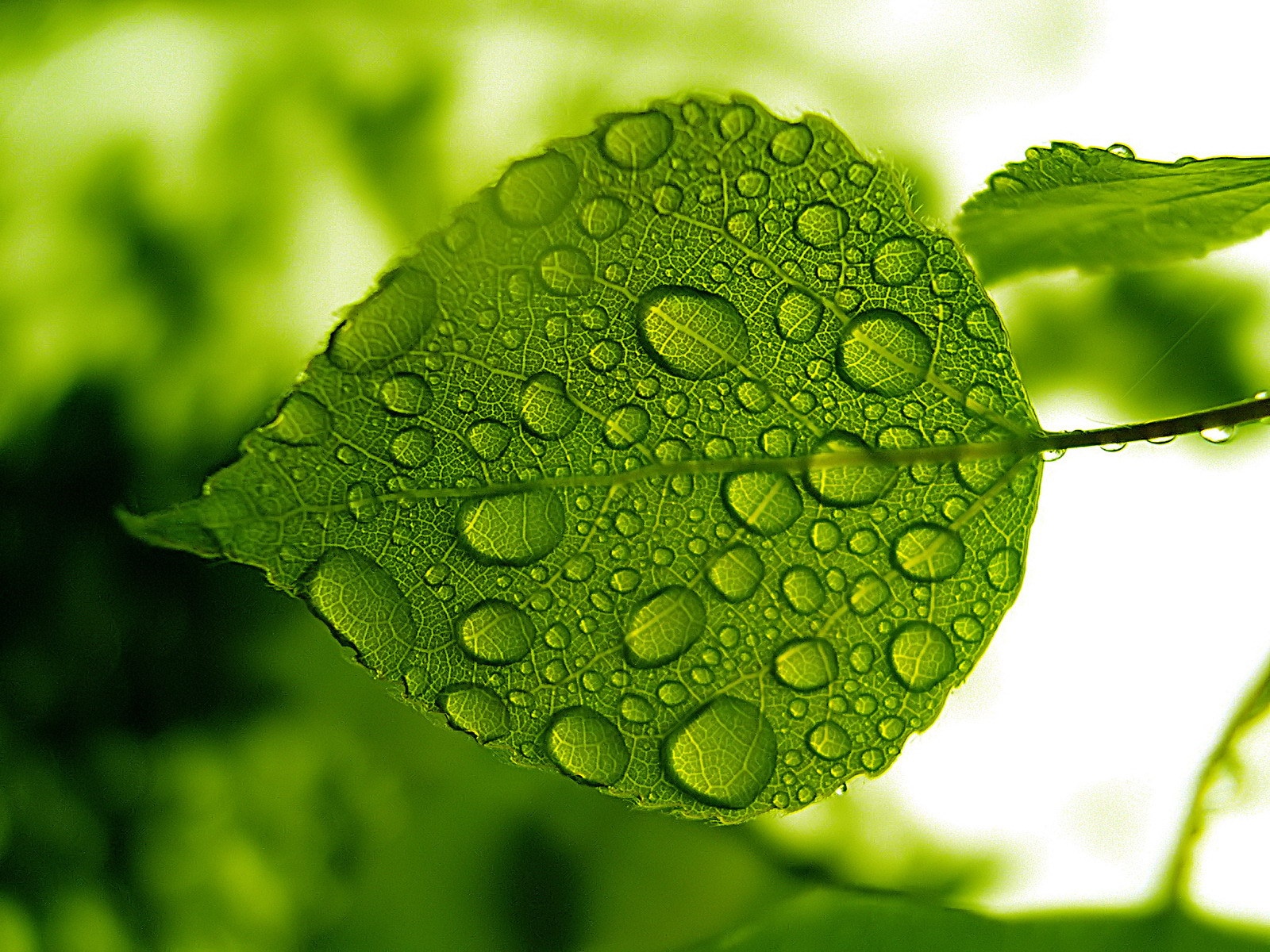
''Picking a leaf off the ground and contemplating it as an object in and of itself is very inspiring. 

Its shape and color, the way it feels in your hand, its delicate veins and the stem that once held it fast to the branch of a tree—all of these qualities reveal a leaf to be a miniature work of natural art. 

As we contemplate this small object more deeply and consider where it came from and what purpose it has served, we find that the leaf is one small but essential part of a system that harnesses the energy of the sun, plumbs the depths of the earth, and in the process brings into being the oxygen many living things rely on to live.
A leaf transforms the elements of its environment—sunlight, carbon dioxide, rain—into nourishment for its tree. 

This beautiful, nearly weightless, ephemeral piece of nature is a vital conduit to the branch that is a conduit to the trunk that is a conduit to the roots of the tree. 

The roots, in turn, draw nourishment from the earth to feed the trunk, the branches, and the leaves. 
The living beings that inhale the oxygen that comes from this process exhale the carbon dioxide that feeds the leaves through which the tree is fed. 

It is difficult to know where one cycle ends and another one begins.

One of the many gifts that nature offers us is a clear demonstration of the interdependence between all living things. 

The person who exhales the carbon dioxide, the clouds that produce the rain, the sun that gives light, the leaf that transforms all these things into sustenance for a tree—not one of these could survive without being part of this cycle.

Each living being is dependent upon other living things for its survival. 

When we look at the world, we see that this is not a place where different beings survive independently of one another. 

Earth is home to a web of living things that are connected to each other through a spinning kaleidoscope of relationships.  

We need each other to survive and thrive¡

(DailyOm, Scott Blum)

segunda-feira, 9 de julho de 2012

allow

Returning to Creative Dreams


''As children, many of us entertained fantasies or even goals of being an actor, singer, dancer, artist, or musician.

In some cases, we received enough encouragement to develop our abilities in those creative arenas, but somewhere along the way we stopped.

This stopping may have been due to circumstances beyond our control or to our own unconscious acts of self-sabotage.

Being creative can be scary in a world that seems to value logic over imagination and practicality over dreaming.

We can forgive ourselves for shutting down or turning our attention away from our inner artist, but perhaps we can also take steps to reclaim our dreams.

In certain times and places, developing a creative ability was considered an important part of being a well-rounded human being.

It was not necessary to be a professional or a masterly genius, because the act of creativity was valued in and of itself.

It gifts are manifold—from the sheer pleasure of allowing our imaginations free reign to sharing and enjoying the fruits of our labor.

Children share drawings and songs freely, without self-consciousness, and there is no reason why we cannot do the same thing.

You may already be remembering some lost form of expression, such as making jewelry or writing songs.

Your soul may be responding with an energetic lift as it feels its way back to a time when it was allowed to express itself freely.

Your brain, on the other hand, may be throwing up obstacles, like the idea that you are too old or do not have the time.

The truth is, you are not too old, and if you have time to pick up a pen, you have time to make a doodle or write a haiku.

Recognize that the obstacles you find before you have arisen from a place of fear and that they will wane in power every time you do something creative.

Each creative act takes you deeper into a realm of beauty and magic, a realm that you have every right to return to and reclaim.''

(Daily Om, Scott Blum)


sexta-feira, 6 de julho de 2012

O que é o Transpessoal?


''O que é o Transpessoal? O conceito Transpessoal tem as suas origens na Psicologia Transpessoal
Esta é um novo ramo da Psicologia, que surgiu como um desdobramento ou evolução da
Psicologia Humanista, cujo representante mais conhecido será, porventura, Abraham Maslow.
Alguns autores consideram-na como a "quarta força" ou "escola", em Psicologia, após o
behaviourismo-cognitivismo, psicanálise e psicologia humanista, integrando todas estas. Tem
raízes no existencialismo, no humanismo e na fenomenologia, encontrando subsídios nos mais
recentes conceitos da física moderna, neurobiologia e informática. A Psicologia Transpessoal foi
oficializada em 1968, nos Estados Unidos da América por Abraham Maslow, Viktor Frankl,
Stanislav Grof e James Fadiman. As associações de profissionais liberais, predominantemente
médicos e psicólogos, que se interessam pela Psicologia Transpessoal passaram a admitir
profissionais de outros saberes, que aderiram aos pressupostos daquela corrente da psicologia e a
sua designação reduziu-se à substantivação da palavra Transpessoal.


A definição de (Psicologia) Transpessoal tem sofrido alterações, embora persista um núcleo
comum de referências ao longo do tempo - pressupostos ontológicos, teorização do "Self", valores
perenes e potenciais evolutivos, estados (modificados) de consciência (EMC) e bem-estar biopsico-
social, integrando também a dimensão espiritual. Nas definições iniciais apresentava-se
como um movimento (com vivências ou experiências transpessoais, aplicações clínicas e sociais e
investigação específica), que estava para "além dos objectivos egóicos e estabelece a ponte entre
práticas psicológicas e espirituais, tendendo a satisfazer a busca de um crescimento espiritual, até
uma directa percepção do divino". De um ponto de vista psicoterapêutico a "sua essência reside
nas atitudes terapeuta, nas experiências transpessoais nas quais o paciente é o seu próprio
terapeuta".


O movimento Transpessoal, pretende o bem-estar bio-psico-emocional-social-cultural-espiritual,
de acordo com o processo evolutivo da pessoa, usando preferencialmente os estados modificados
de consciência em vígilia nos quais a pessoa (ou paciente) é o seu próprio terapeuta, integrando os
conhecimentos das tradições orientais (xamanismo, meditação, etc.) e ocidentais (experiências
místicas, de quase-morte, hipnose, sonho acordado, psicodislpticas, etc.) sobre aqueles estados
com os obtidos pela ciência moderna. No campo da Psicologia Transpessoal, está é a
área da
psicologia que estuda os estados modificados de consciência e os fenómenos, de qualquer tipo,
com eles relacionados
(sua psicofisiologia e as experiências humanas excepcionais ou
diferenciadas, que decorrem da aplicação terapêutica). Trata-se de uma definição pragmática, para
iniciar trabalhos inter e transdisciplinares no meio académico. Refira-se que numa análise de
conteúdo de definições nos últimos 23 anos, feita por Lajoie & Shapiro em 1992, estes autores
propunham um consenso:
ocupa-se odo estudo do mais elevado potencial da humanidade e com o
reconhecimento, compreensão e realização de estados de consciência unitivos espirituais e
transcendentes.''


Prof. Doutor Mário Simões – Prof. Psiquiatria Universidade de Lisboa – Portugal

Co-fundador da Alubrat – Portugal / Brasil

Interesting people everywhere


''It’s easy to forget sometimes that everyone has a story to tell if we take the time to listen.

We are so accustomed to hearing the stories of people in the news that we sometimes lose track of the fact that the random stranger on the bus also has a fascinating story about where they came from and how they got to be where they are.

The sheer variety of paths taken in this world, from farmers to CEOs to homeless people to world travelers, is indicative of how much we can learn from each individual.

Sometimes the shy, quiet person at work has the most amazing life story and the biggest dreams, it is up to us to take the time to find out.

Some people travel a path of wealth and privilege, while others struggle with only themselves to rely on, and both have great stories to tell.

Each person learns lessons, makes choices, and develops a unique perspective, which only they can claim and share.

Even two people who have had very similar lives will have slightly different experiences, leading them to a different point of view, so each person remains a treasure trove waiting to be explored.

When we take the time to ask questions and listen, we find that every person has a fascinating story to tell and an utterly unique perspective from which to tell it.

Bearing this in mind, we have the opportunity to approach the world around us in a new way.

There is never any reason to be bored at a party, or on the bus, or in a conversation with a stranger.

When we retain the spark of curiosity and the warmth required to open someone up, we always have in front of us the makings of a great story.

All we have to do is ask. ''

(DailyOm, Scott Blum)


quinta-feira, 5 de julho de 2012

quinta dimensão


quinta dimensão


Hoje ou ontem, tal como amanhã
por entre o negrume da vida que nasce noite,
haverá lugar espaço momento, ponto fixo
e em perpétuo e firme movimento.
Haverá lugar, de encontro na fenda agreste
de um lamento, à língua, saliva ou pacho
que tape alise deslace, pele pano ou queixume.
Haverá espaço, do encantamento à alegria justa
clara e férrea sedenta de lar, de vida.
Haverá momento, sem vergonha prenhe de medo,
hirto, que esbarre e escorra, em má e triste hora.
Haverá ponto, prefixo humano deveras perdido
aflito, que se agarre e sucumba à oração que engana.

Amanhã ou ontem, tal como hoje agora,
há um ponto perpétuo e firme
pueril superfície interna em movimento
que deveras resgata e salva.


(Ousadias , pag 52)

Remember the light side


''Often when we talk about fun, or doing things just for fun, we talk about it in a dismissive way as if fun isn’t important.

We tend to value hard work and seriousness, and we forget to pay our respects to the equally important, light side of silliness and laughter.

This is ironic because we all know the feeling of euphoria that follows a good burst of laughter, and how it leaves us less stressed, more openhearted, and more ready to reach out to people.

We are far more likely to walk down the street smiling and open after we’ve had a good laugh, and this tends to catch on, inspiring smiles from the people we pass who then positively influence everyone they encounter.

Witnessing this kind of chain reaction makes you think that having fun might be one of our most powerful tools for changing the world.

Laughter is good medicine, and we all have this medicine available to us whenever we recall a funny story or act in a silly way.

We magnify the effects of this medicine when we share it with the people in our lives.

If we are lucky, they will have something funny to share with us as well, and the life-loving sound of laughter will continue to roll out of our mouths and into the world.

Of course, it is also important to allow ourselves to be serious and to honor that side of ourselves so that we stay balanced.

After a great deal of merriment, it can actually be a pleasure to settle down and focus on work, or take some time for introspection until our next round of fun begins.''

(Daily Om, Scott Blum)


quarta-feira, 4 de julho de 2012

água


Water: The drop of life from Daniel Gallenkamp N.S.C.

Pureza*Respeito*Tranquilidade*Harmonia